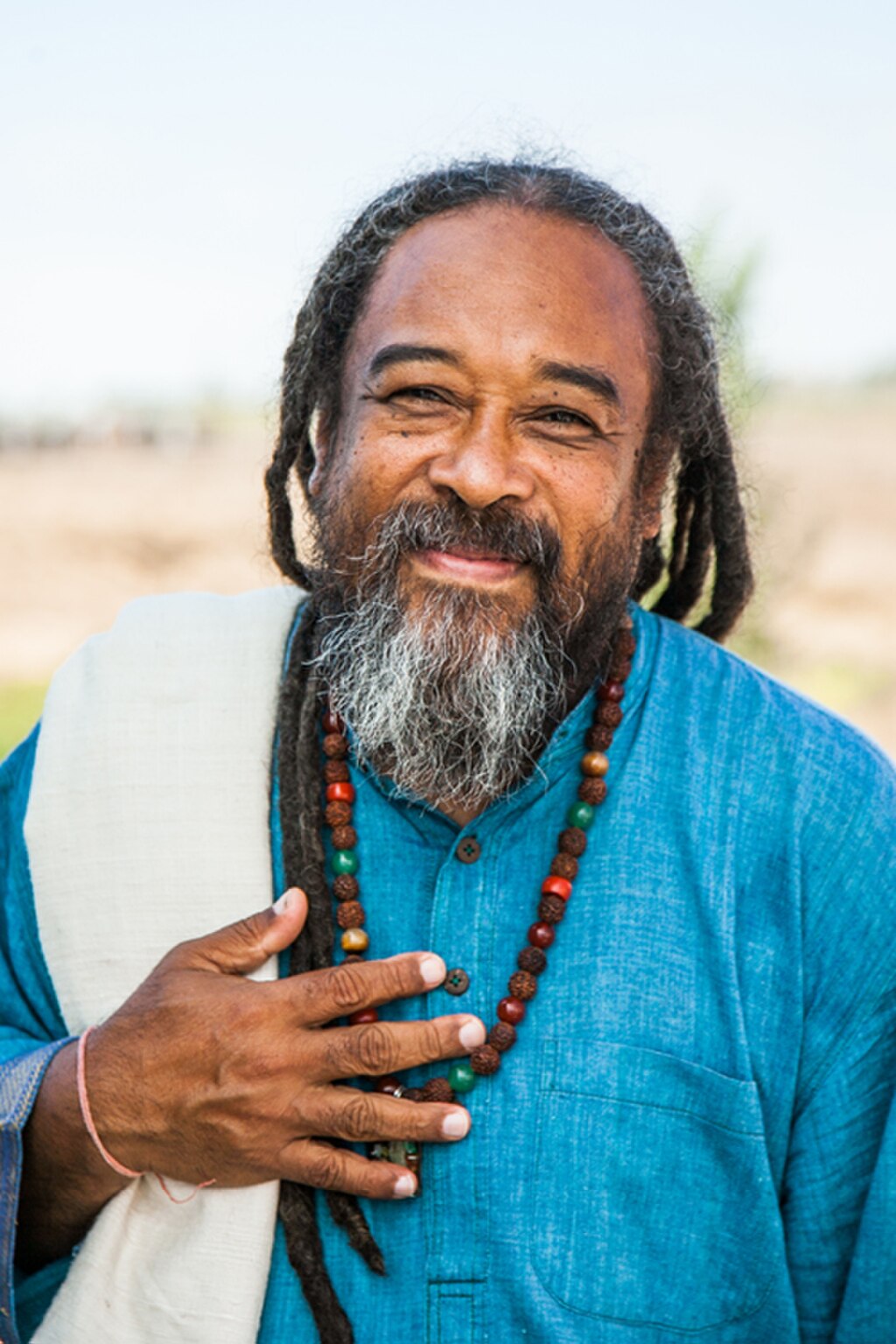
Awakening to the Unborn: Embracing Awareness Beyond Form
The phrase "Be the unborn awareness," as articulated by Mooji, invites us into a profound exploration of our true nature. It suggests that we can transcend the limitations of our conditioned identities and connect with a deeper essence that exists beyond birth and death. This teaching is not merely philosophical; it serves as a call to awaken to the awareness that underlies all experience, urging us to recognize our intrinsic connection to the universe and the eternal present moment.
In a world often dominated by the transient and the superficial, Mooji's words resonate with a timeless truth. They challenge us to look beyond the ephemeral aspects of life—our thoughts, emotions, and identities—and to discover the stillness and clarity of our true self. This journey towards recognizing the unborn awareness is not just a personal endeavor; it is a collective awakening that has the potential to transform our relationships, communities, and ultimately, our world.
The image / the metaphor
The imagery of "unborn awareness" evokes a sense of purity and potentiality, suggesting a state of being that is untouched by the vicissitudes of life. The term "unborn" implies a reality that is not constrained by time or form, a state of existence that precedes all creation. In this context, awareness is not merely a passive observation; it is an active engagement with the essence of life itself, a recognition of the underlying consciousness that permeates all things.
In the speaker's tradition
Mooji's teachings are deeply rooted in the non-dual tradition, which emphasizes the unity of all existence and the illusion of separateness. Concepts such as *sunyata* (emptiness) and *fana* (annihilation of the self) resonate with the idea of unborn awareness, as they point to the dissolution of the ego and the realization of our interconnectedness. In this framework, the journey towards recognizing our unborn essence is a path of self-inquiry and surrender, where we learn to let go of our attachments to form and identity.
In Mooji's work, we often encounter references to the *Upanishads*, ancient texts that explore the nature of reality and the self. For instance, the *Mandukya Upanishad* speaks of the four states of consciousness, culminating in the realization of *turiya*, the fourth state that transcends waking, dreaming, and deep sleep. This aligns beautifully with Mooji's invitation to embody the unborn awareness, encouraging us to recognize that our true essence is beyond the fluctuations of our mental and emotional states.
Living the teaching
Consider a modern scenario where the teaching of "being the unborn awareness" can be applied: a hectic day at work filled with deadlines and pressures. In such moments, it is easy to become overwhelmed by stress and anxiety, identifying ourselves solely with our roles and responsibilities. However, by cultivating a sense of unborn awareness, we can step back and observe our thoughts and feelings without becoming entangled in them. This practice allows us to respond to challenges with clarity and calmness, rather than reacting from a place of fear or urgency.
Another application of this teaching can be found in our relationships. When faced with conflict or misunderstanding, we often cling to our perspectives, reinforcing a sense of separation. By embodying the unborn awareness, we can approach these situations with a sense of openness and compassion, recognizing that our true selves are not defined by our opinions or grievances. This shift in perception fosters deeper connections and understanding, allowing us to navigate the complexities of human interaction with grace and empathy.
A reflection
As we contemplate Mooji's invitation to "be the unborn awareness," we are called to reflect on the nature of our own existence. What does it mean to live from a place of awareness that is untouched by the transient aspects of life? In moments of stillness, we can ask ourselves: How can I cultivate a deeper connection to this unborn essence within me, and how might this shift my experience of the world around me?



Join the BrightStar Community
Stay connected with daily inspiration, event announcements, and community wisdom