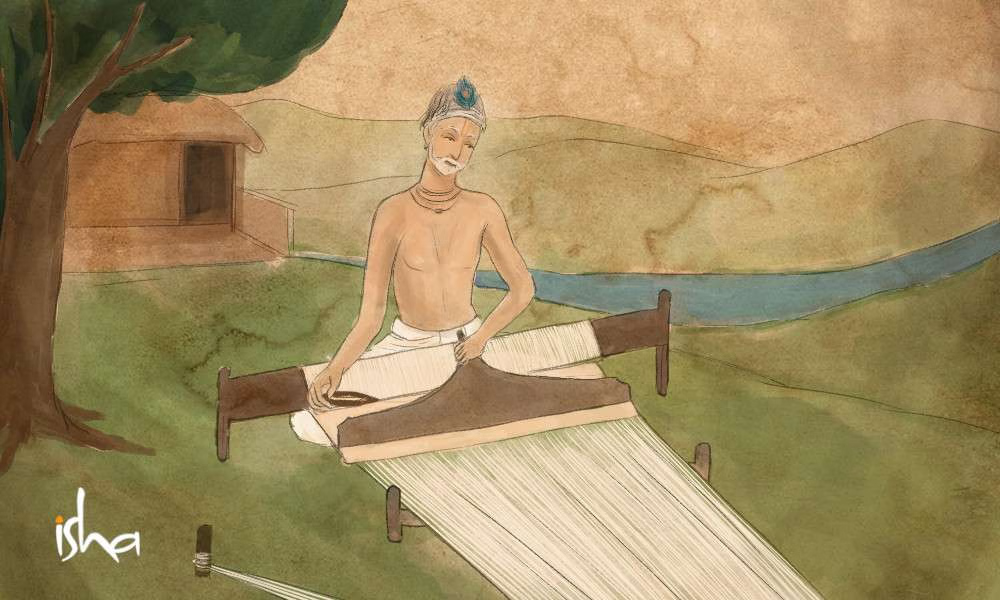
The Eternal Playground of Impermanence
In the evocative words of Kabir, "This world is the playground of Death; here he plays his eternal game." This statement invites us to confront the transient nature of existence, suggesting that our lives unfold within a space where mortality reigns supreme. The stakes are high, as recognizing this truth can lead us to a deeper understanding of our own lives, prompting us to engage with the present moment more fully. In a culture often preoccupied with permanence and security, Kabir's words serve as a reminder of the impermanence that defines our human experience.
As we delve deeper into this quote, we uncover layers of meaning that resonate with the core of human existence. Kabir presents death not merely as an end but as an active participant in the dance of life. This perspective encourages us to embrace the fleeting nature of our experiences, urging us to play our part in the eternal game. By acknowledging death as a constant companion, we can cultivate a sense of urgency and appreciation for the present, transforming our relationship with both life and death.
The image / the metaphor
The imagery in Kabir's quote is striking, evoking a sense of playfulness intertwined with the gravity of mortality. The term "playground" suggests a space of exploration and joy, yet it is juxtaposed with the figure of Death, who "plays" an eternal game. This duality captures the essence of life itself: a blend of lightness and seriousness, joy and sorrow. The verbs chosen—"play" and "eternal"—imply a dynamic interaction, where death is not a distant specter but an active force shaping our experiences.
Diving deeper into the metaphor, we can see that the "game" of Death is not one of mere destruction but of transformation. In this playground, every moment is an opportunity for growth, learning, and connection. The eternal game suggests that life is cyclical, with death serving as a catalyst for new beginnings. This perspective invites us to view our challenges and losses not as finalities but as integral parts of a larger narrative, encouraging us to engage fully with the present while remaining open to the mysteries of existence.
In the speaker's tradition
Kabir's insights are deeply rooted in the bhakti tradition, which emphasizes devotion and the personal relationship with the divine. Central to this tradition is the concept of impermanence, or "anitya," which teaches that all things are transient and subject to change. This understanding aligns with the notion of "fana," or the annihilation of the self, where one surrenders the ego to experience unity with the divine. Kabir's perspective on death as an active participant in life encourages a bhakti practitioner to embrace love and devotion in the face of life's uncertainties.
In the context of Kabir's teachings, we can draw parallels to the Buddhist concept of "sunyata," or emptiness, which also emphasizes the impermanent nature of existence. Just as Kabir invites us to recognize the playful nature of death, Buddhist philosophy encourages us to see beyond the illusions of permanence. In both traditions, the acknowledgment of impermanence serves as a gateway to deeper understanding and compassion, allowing us to engage with life more authentically and fully.
Living the teaching
Consider a modern scenario where this teaching resonates: a loved one is diagnosed with a terminal illness. In the face of such profound loss, the awareness of death can either paralyze us with fear or inspire us to cherish every moment. By embracing the idea that life is a playground where death plays an eternal game, we can shift our focus from despair to gratitude. This perspective encourages us to create meaningful memories, engage in heartfelt conversations, and express our love openly, transforming a painful experience into an opportunity for connection and growth.
Another application of Kabir's teaching can be found in our daily relationships. When conflicts arise, we often cling to our grievances, forgetting that life is fleeting and that our time together is limited. By recognizing the impermanence of our interactions, we can approach disagreements with a sense of playfulness and openness. This shift allows us to prioritize understanding and compassion over being right, fostering deeper connections and enriching our relationships. In this way, Kabir's wisdom invites us to live fully, embracing both the joy and sorrow that life presents.
A reflection
As we contemplate Kabir's profound words, we are left with a contemplative question: How does the awareness of impermanence shape your understanding of your own life and relationships? Reflecting on this question can illuminate areas where we may be holding back, encouraging us to engage more deeply with the present moment. In recognizing that this world is indeed a playground of Death, we may find the courage to live more authentically, embracing the beauty and fragility of our existence.




Join the BrightStar Community
Stay connected with daily inspiration, event announcements, and community wisdom